Classy Games' Jamie McClenaghan on the making of Orbital
"I've always been fascinated by space, black holes, wormholes, supernovae, and the science behind them."


Orbital started with a simple obsession: black holes, wormholes, exploding stars, and the science behind them. What began as a free mobile game during COVID-19 went on to pass 200,000 downloads and 180,000 hours of playtime, numbers strong enough to convince Classy Games to rebuild it from scratch for PC.
Now live on Steam with nine planets, each with its own unique powers, and a global leaderboard, Orbital mixes real space facts with fast, arcade-style survival. We spoke to Classy Games founder and CEO Jamie McClenaghan about turning that spark into a full release.
IsaKaba: What initial spark led to the creation of Orbital?
Jamie: I've always been fascinated by space, black holes, wormholes, supernovae, and the science behind them. I wanted to create an arcade game that fed that passion while still being fun to pick up and play. This was during COVID-19, and I wanted to make a free game people could enjoy on their phones.
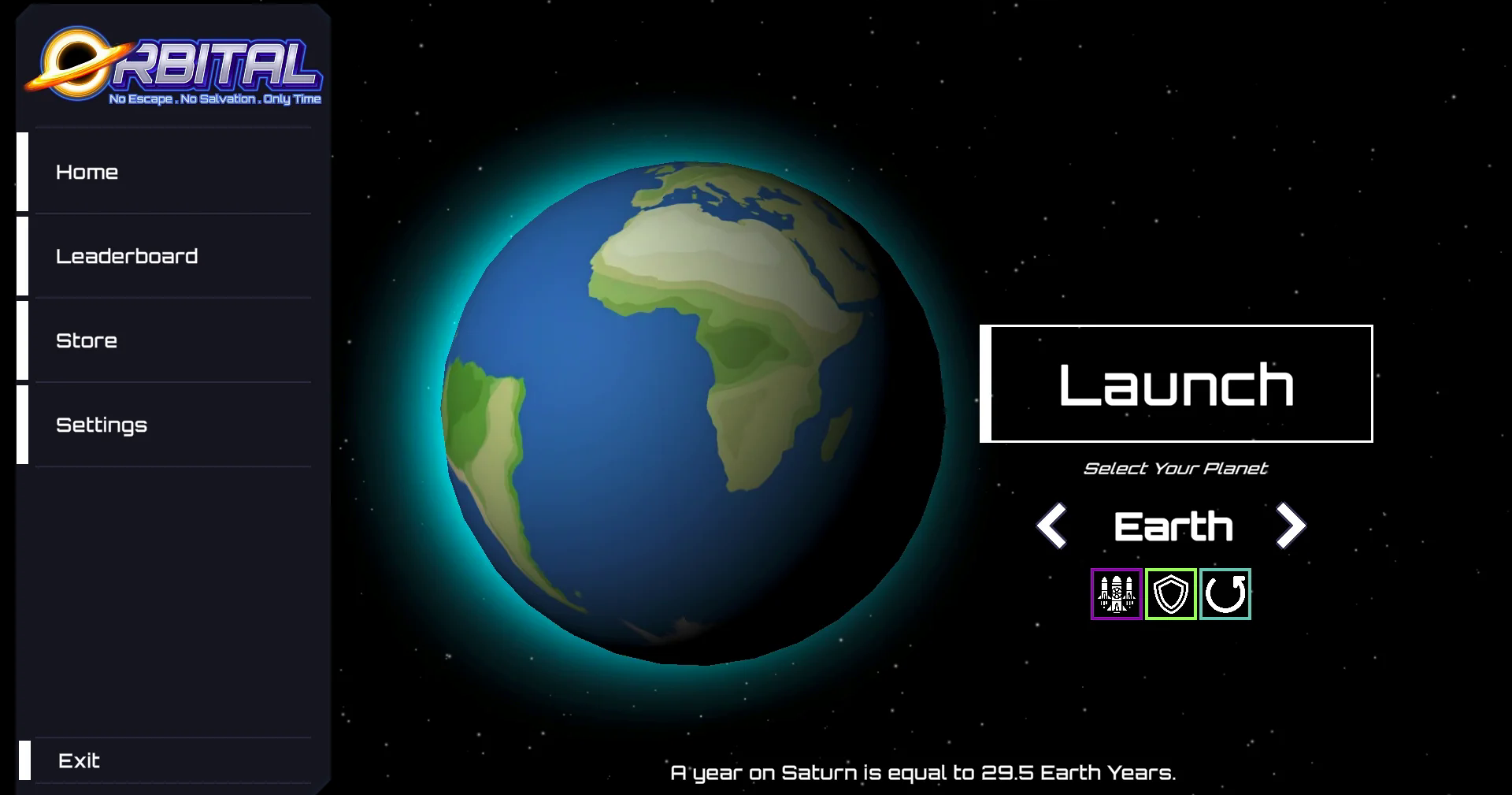
The original prototype was built for mobile, but the version available now is a completely rebuilt PC release on Steam. While we did take some ideas from other space games in the genre, the core of Orbital came from wanting to blend real space science with accessible arcade gameplay.
How long did development take, and how many people worked on the game?
The PC version of Orbital took around four months to develop, on and off. Three people worked on the game.
When you first released Orbital, what were you hoping the game would achieve, and how different was the finished game from that original vision?
When we decided to bring it to PC, it was because we had strong demand from players asking for a Steam version. For the PC release, we wanted to create a game people could jump into and compete with friends in a friendly, accessible way, while also learning a little about space.
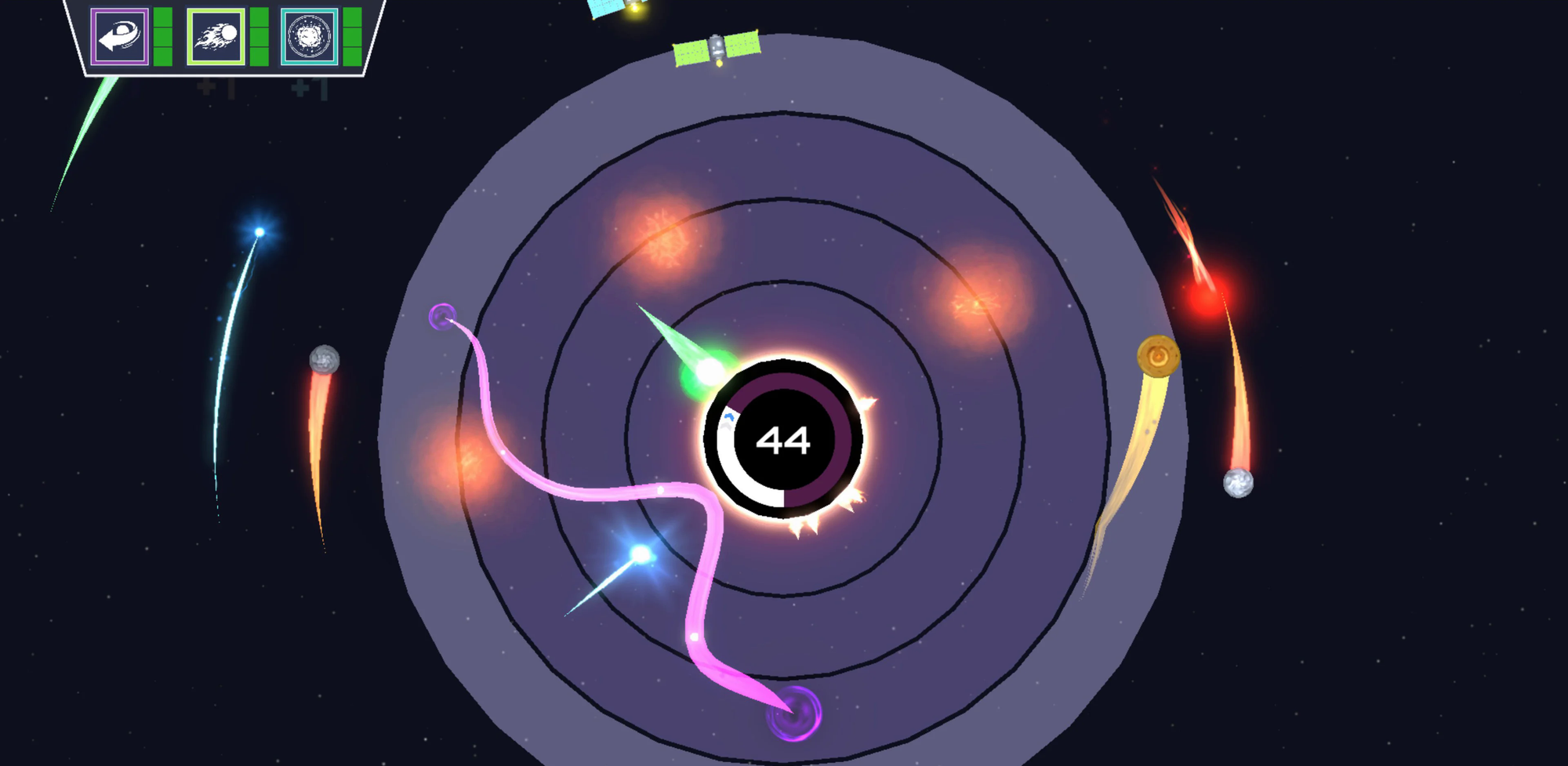
A lot of what's in the game draws from real facts: the rotation, spin, and tilt of planets are all rooted in actual science, but it's still an arcade game at its core. The original mobile version only had one planet with four weapons.
The PC version now has nine planets, each with three unique technologies, a global leaderboard, new cosmic obstacles, different asteroids, and far more depth across the board. Classy Games is a PC-first studio, and we made the decision to move away from mobile into PC premium games.
We looked at what it would take to rebuild the game for the platform and went for it. Many of those original players came back and made the move from mobile to PC.
Were there any moments where you felt the game might not come together? Talk to us about some of the biggest challenges in designing the planetary controls and making something as unusual as piloting a planet feel intuitive and satisfying.
There was never a point where we were concerned about the development itself. The vision for Orbital was clear from the start: that quick, intense experience where you have to think on your feet and live with the consequences of your decisions. Do you use this technology now or save it for later? Do you try to dodge instead? Do you risk entering a wormhole? Every choice matters.
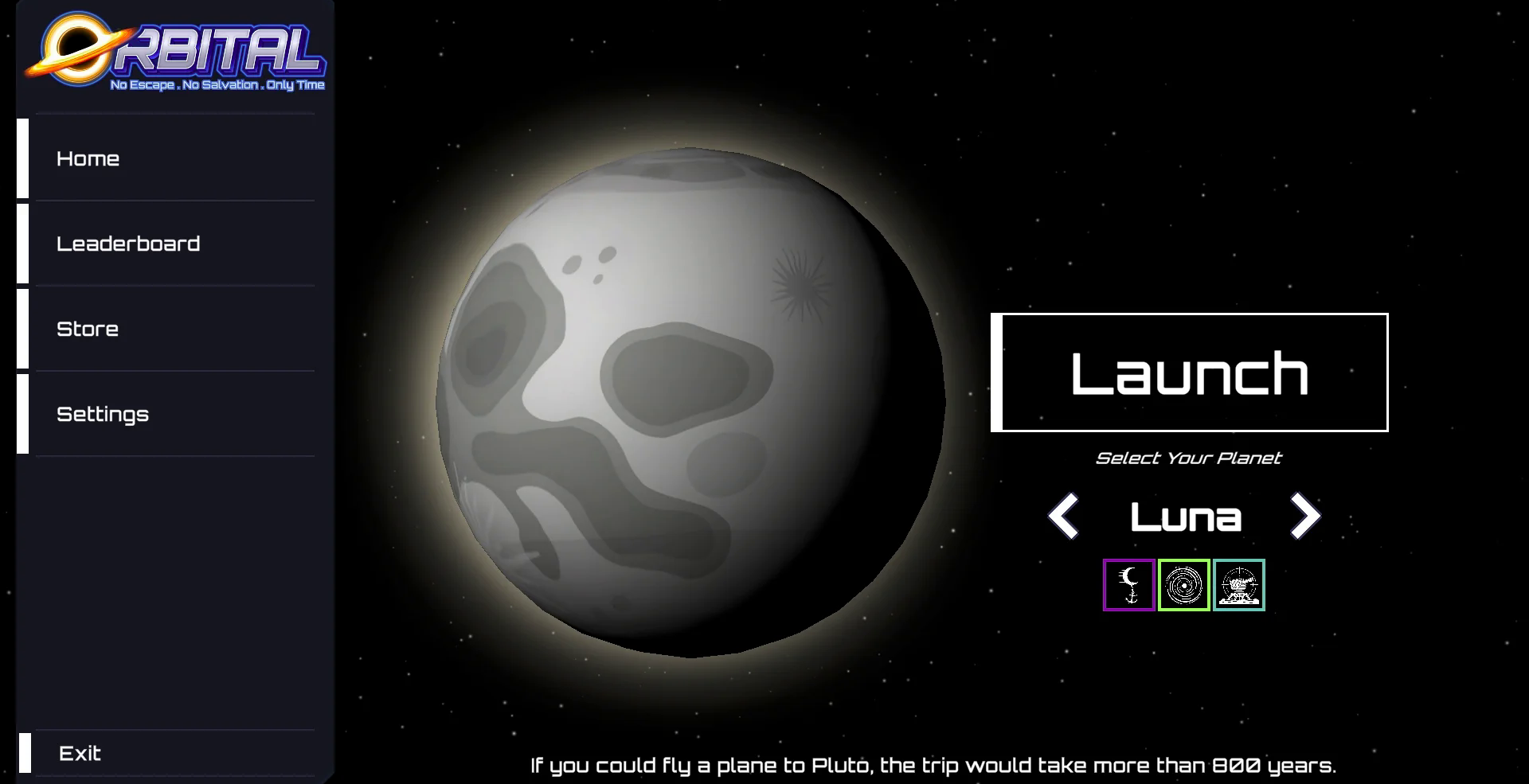
The biggest challenge has been creating unique technologies for each planet. We wanted every planet to feel distinct and offer a different style of play, but at the same time each technology needed to have a nod to the real planet it represents. For example, Jupiter has a technology that uses its moons to form a protective barrier, since it has dozens of moons in real life.
Trying to design technologies that feel fresh, play differently, and still connect to real planetary science has been the toughest part. Every planet also handles slightly differently in terms of speed and weight, but it's the technologies that really set each one apart.
Were there any features or mechanics that didn't make the final cut? If so, why?
Many. We've ideated dozens of technologies for different planets that ended up being dropped because they were too similar to something already in the game. We didn't want reskins. We wanted every technology to feel completely new.
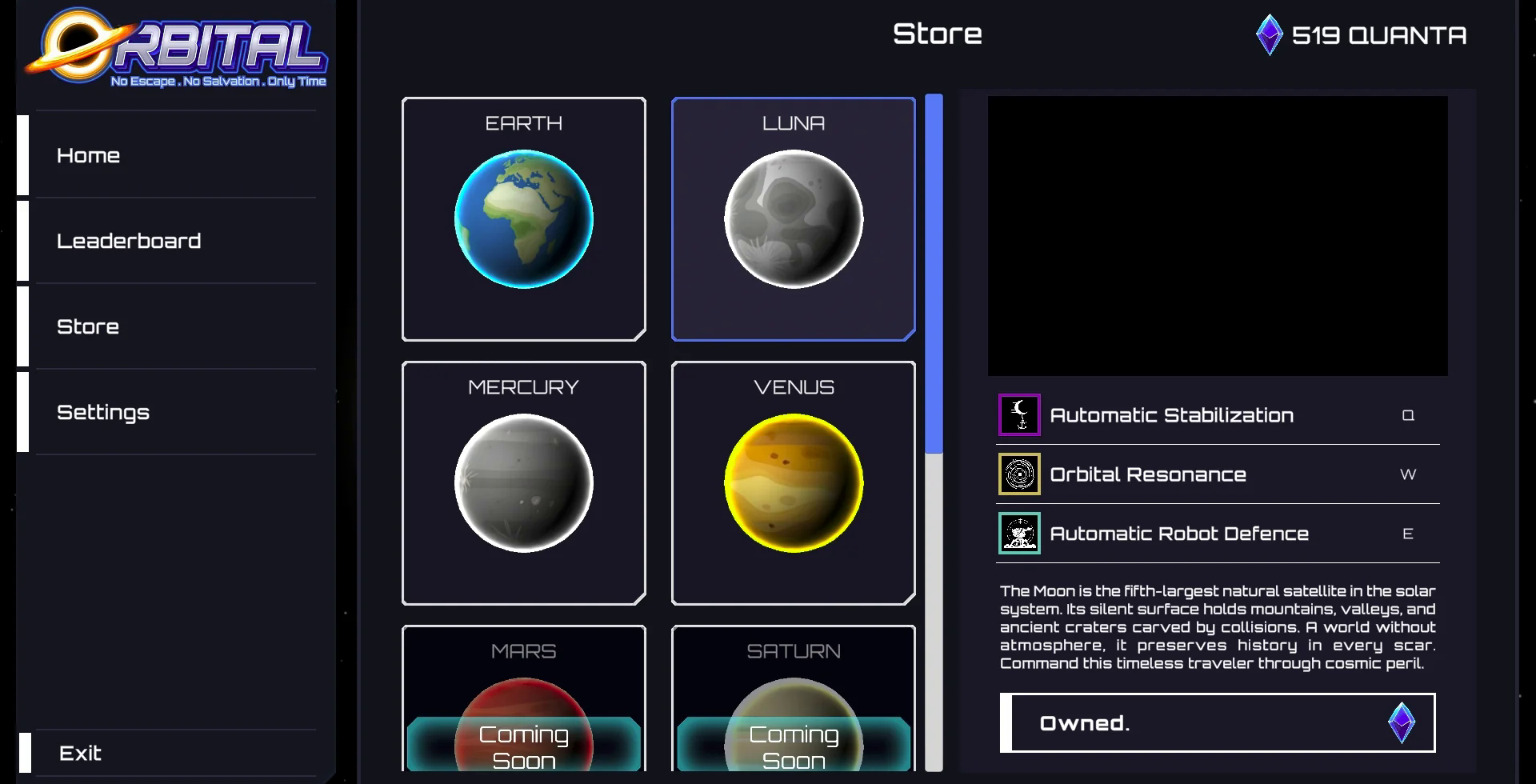
We built a back-end system that lets us quickly assign and test technologies on different planets, which has been essential because each planet has three technologies, and they all need to pair well together. That system allowed us to rapidly iterate, but it also meant a lot of ideas got tested and cut because they just didn't bring enough that was unique.
What do you think makes your game stand out, and what part of the experience do you most want players to enjoy?
Orbital stands out because every planet offers a different gameplay experience through its unique technologies. There are endless possibilities in how you approach each run and how you use each planet to endure for as long as possible. We've also put a lot of care into the smaller details that add flavour and polish.
The menu features real facts about space and the solar system. The background is dynamic with satellites and asteroids you can interact with. In the store, each planet's technologies are previewed through video playback so you can see them in action before unlocking them.
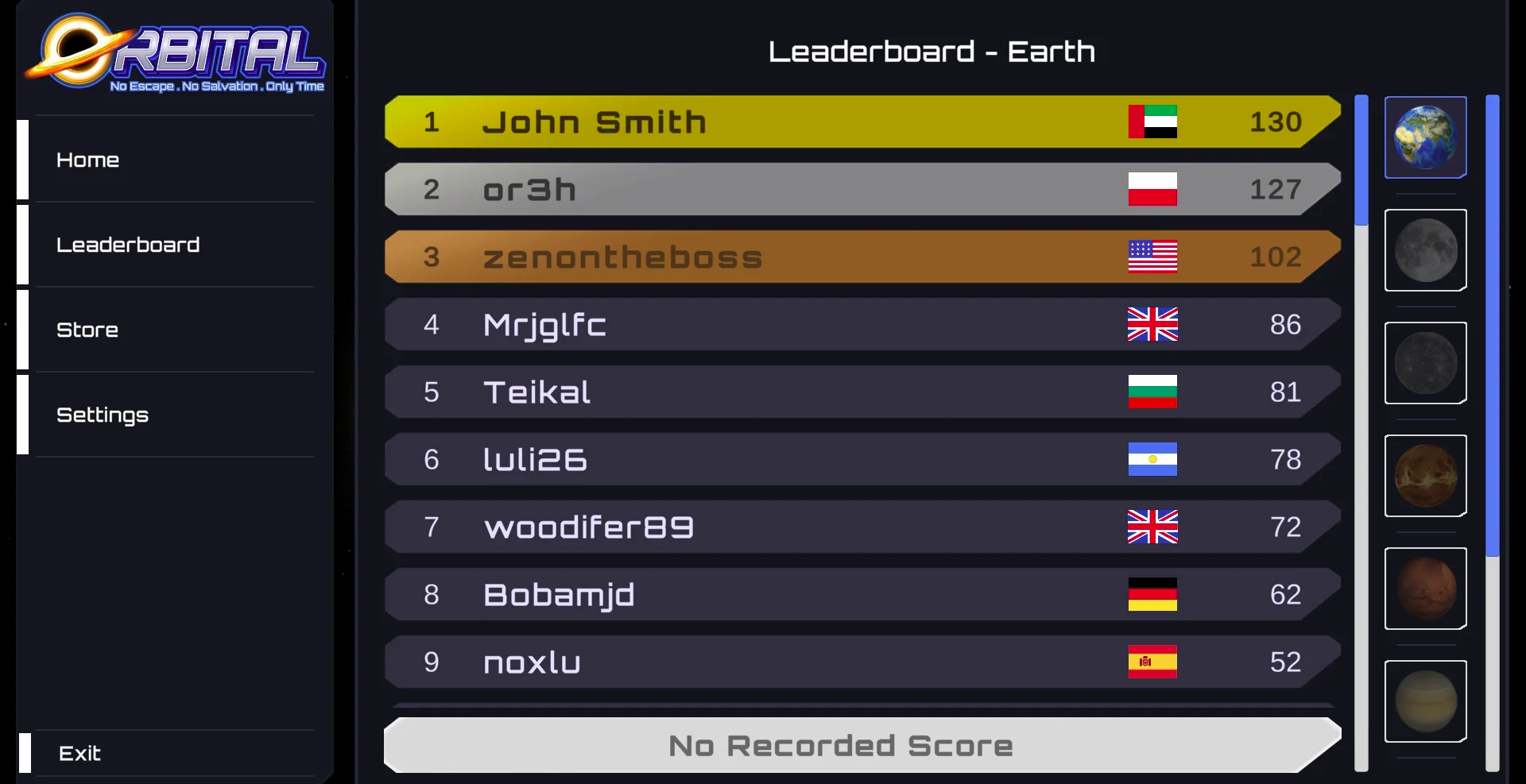
What I most want players to enjoy is the "one more run" feeling. It's similar to the "one more turn" pull in Civilization. In every playtest we've run, we see the same thing: someone sits down planning to play for twenty minutes, and three hours later they're still going because they want to beat their previous high score or try a new technique. We also have a global leaderboard for every planet, which fuels that competitive drive and keeps people coming back.
Are there plans to bring it to other platforms? If so, what platforms are you considering? And what's next for the team?
Nothing is confirmed yet, though we are looking at bringing Orbital to PlayStation and other PC platforms such as Epic and GOG. More details on that in the future.
We just released Silly Suspects, which is also available on Steam. We're also preparing our next unannounced project, and we're rolling out a new phase of community engagement with events and other initiatives that we can't fully disclose yet. Plenty to look forward to in the coming months.
Founded in 2021, Classy Games is a Saudi Arabia-based PC and console studio with roots in Northern Ireland and the UAE. Backed by Merak's accelerator with $300,000 secured, the studio has shipped Orbital, Silly Suspects, and is currently working on a third game.
Classy Games is listed in the IsaKaba Studios Directory.